
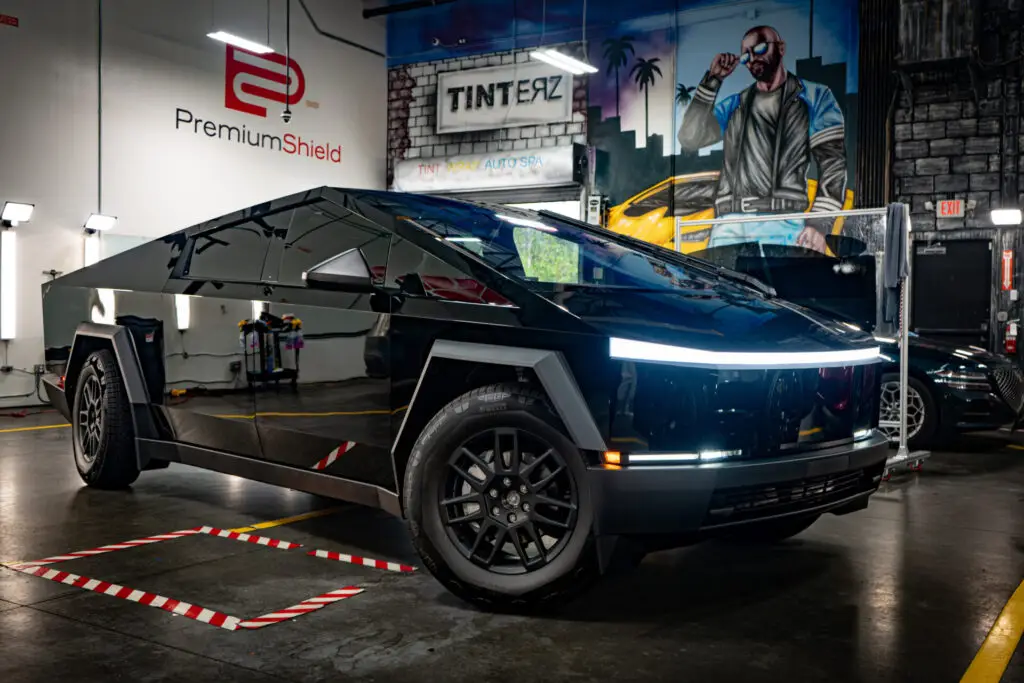
PPF comes in coverage tiers, not one-size-fits-all. The most popular options are the partial front (bumper, part of the hood, mirrors — $800–$1,500), the full front end (whole hood, fenders, bumper, mirrors, headlights — $1,500–$2,500), and full-body coverage (every painted panel — $4,000–$8,000+). For most Florida drivers, a full front end protects 80–90% of where rock chips actually happen. Here’s how each package works and how to pick the right one.
Why PPF Coverage Is Sold in Packages
Paint protection film is priced by how much of the car you cover, because film and labor are the two biggest costs. Rather than an all-or-nothing choice, shops break coverage into tiers so you can match protection to your budget and driving habits.
The key insight: road damage isn’t evenly distributed. The front of your car takes the vast majority of rock chips, love-bug etching, and highway debris. That’s why the smart-money packages concentrate on the front end first, then expand outward. For the full pricing picture, see our PPF cost guide.
The Main PPF Coverage Packages
Here’s how the standard tiers compare:
| Package | What’s Covered | Typical FL Cost | Best For |
|
Partial front
|
Front bumper, partial hood (~18–24″), mirrors | $800–$1,500 | Budget-minded, city driving |
|
Full front end
|
Full hood, full fenders, bumper, mirrors, headlights | $1,500–$2,500 | Most daily drivers |
|
Track / high-impact pack
|
Rocker panels, rear bumper, door edges, A-pillars, door cups | $800–$2,000 | Highway commuters, add-on |
|
Full body
|
Every painted panel, bumper to bumper | $4,000–$8,000+ | New/luxury/EV, resale-focused |
Prices reflect premium film (like LLumar) installed. Vehicle size and complexity move the number within each range — more on that below.
Partial Front (“Basic” Front Protection)
The entry point. This covers the front bumper, the leading 18–24 inches of the hood, and the side mirrors — the panels that catch the first wave of debris. It’s affordable and covers the highest-impact zone, but it leaves a visible line across the hood and doesn’t protect the rest of the hood or the fenders.
Downside to know: on a sunny Florida car, an unprotected rear section of hood can age slightly differently than the filmed front over many years. For most people that’s not noticeable, but it’s why we usually recommend stepping up if the budget allows.
Full Front End (Our Most Popular)
This is the sweet spot for the majority of drivers. It wraps the entire hood, both full fenders, the front bumper, mirrors, and headlights — no line across the hood, complete coverage of the zone where 80–90% of road damage occurs. On I-4, I-275, and the Selmon Expressway, that front-end debris exposure is a daily reality.
You get seamless, edge-to-edge protection on the parts of the car that matter most, and because premium PPF is optically clear with self-healing technology, it’s essentially invisible.
Track / High-Impact Package
Not a standalone “front” package — this is a custom add-on that targets secondary impact zones: rocker panels (road spray and gravel), rear bumper (parking dings and loading scuffs), door edges and door cups (fingernail scratches and ring marks), and A-pillars/roof leading edge (highway bug splatter). Great paired with a full front end for drivers who rack up highway miles.
Full-Body Coverage
Every painted panel, bumper to bumper. This is the choice for new luxury vehicles, EVs with notoriously thin factory paint (Teslas, Rivians), collector cars, and anyone focused on preserving resale value. It’s the biggest investment but delivers total protection and the easiest long-term ownership. Many full-body clients also add a ceramic coating on top for gloss and easy cleaning.
How to Choose the Right Coverage
Ask yourself three questions:
- How much highway driving do you do? Lots of I-4/I-275 miles = more front-end and rocker-panel exposure. Lean toward full front end plus a track pack.
- How long will you keep the car? Keeping it 5+ years or protecting resale value pushes toward full front or full body. Trading in within a year? Partial front or skip it.
- What’s the car worth to you? New, luxury, EV, or something you love → invest more. Older daily beater → partial front is plenty.
The Best-Value Setup for Florida Drivers
For most people, the highest-return combination is: full front-end PPF + ceramic coating on the rest of the car. You get physical rock-chip protection where damage actually happens, plus easy-clean chemical protection everywhere else — without paying for full-body film. If you want the maximum, our ultimate car protection package combines PPF, ceramic, and tint.
What Affects the Price Within Each Tier
Two cars can get the “same” package at different prices. The variables:
- Vehicle size — an SUV or truck needs more film than a sedan
- Body complexity — European cars (BMW, Porsche, Audi) and vehicles with deep recesses take more labor
- Paint condition — existing swirls or chips may need paint correction first ($300–$1,000+), since film locks in whatever’s underneath
- Film brand and finish — premium and colored/matte PPF cost more than standard clear
New cars are the cheapest to protect because they rarely need correction — one reason we recommend PPF early. See our new car PPF guide for more.
Can You Add Coverage Later?
Yes. Many customers start with a partial or full front end, then add a track pack or additional panels down the road. Film is applied panel-by-panel, so expanding coverage later is straightforward — though you’ll pay a bit more than if it were all done at once, since setup and prep happen each visit.
Frequently Asked Questions
What’s the difference between partial front and full front PPF?
Partial front covers the bumper, mirrors, and only the leading 18–24 inches of the hood, leaving a line across the hood. Full front end covers the entire hood, both full fenders, bumper, mirrors, and headlights with no visible line — complete protection of the front impact zone.
How much of my car should I PPF?
For most drivers, a full front end protects 80–90% of where rock chips occur and offers the best value. Add a track pack (rockers, rear bumper, door edges) if you drive lots of highway miles. Full body makes sense for new, luxury, EV, or collector vehicles.
How much does a full front-end PPF package cost in Florida?
Typically $1,500–$2,500 for premium film, depending on your vehicle’s size and complexity. SUVs, trucks, and European cars fall at the higher end.
Is partial front PPF worth it?
Yes, if budget is the main constraint — it protects the single most chip-prone area (the bumper) affordably. But the visible line across the hood and the exposed fenders make the full front end a better long-term value for most people.
Can I just PPF the front bumper?
Absolutely. A bumper-only job is one of the most affordable options and protects the panel that catches the most debris. It’s a common starting point that you can expand later.
Do I need full-body PPF?
Only if you want total protection — usually worth it for new luxury cars, EVs with thin paint, collector vehicles, or resale-focused owners. Most daily drivers are well served by a full front end plus ceramic coating on the rest.
Get the Right PPF Coverage for Your Car
Not sure which package fits your vehicle and driving? We’ll walk you through the options and give an honest recommendation — no upselling — at our Orlando, Tampa, and Clearwater shops. Every install uses premium LLumar film with a 10-year manufacturer warranty.
Book your appointment:
- Orlando — (407) 550-0072
- Tampa — (813) 333-5068
- Clearwater — (727) 476-7744
Compare pricing in our PPF cost guide, learn the basics in our complete PPF guide, or see the max setup in our ultimate car protection package.


