
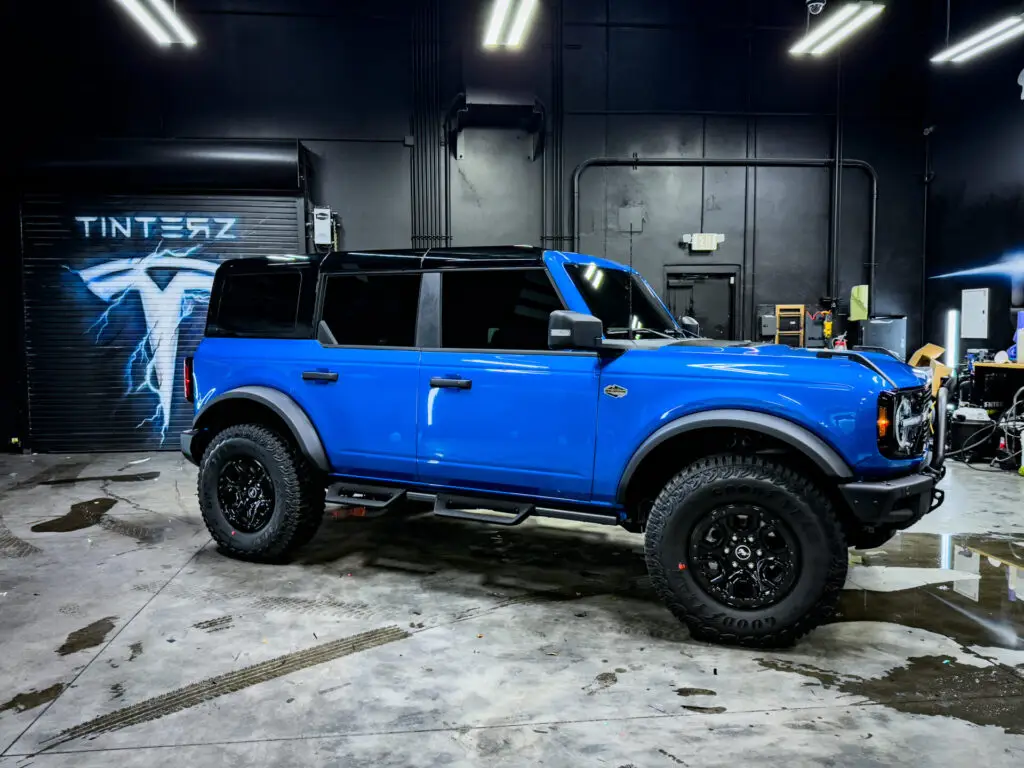
Panoramic and glass roofs look amazing but turn into a heat magnet in Florida — that huge overhead pane pours in infrared heat and UV. Tinting the sunroof or panoramic roof with ceramic film dramatically cuts cabin heat, blocks up to 99% of UV, and reduces glare, all without replacing the glass. Expect roughly $100–$400 depending on roof size and film. We tint sunroofs and panoramic roofs across our Orlando, Tampa, and Clearwater shops. Here’s what to know.
Why Panoramic Roofs Are a Heat Problem in Florida
Panoramic sunroofs and full glass roofs (like those on many Teslas, SUVs, and modern sedans) are gorgeous — but they’re also a massive expanse of glass sitting directly in the Florida sun. That overhead glass:
- Pours in infrared heat — turning the cabin into a greenhouse
- Beats down UV on the driver and passengers’ heads and shoulders
- Creates glare and an uncomfortable “hot head” feeling
- Fades your interior — especially rear seats and trim under the glass
Factory-tinted panoramic glass usually blocks some light but, like other factory tint, does little for actual heat. On a summer afternoon in Central Florida, an untreated glass roof makes the AC work overtime. Roof tinting fixes that.
What Is Sunroof / Panoramic Roof Tinting?
It’s the same concept as window tint — a film applied to the glass — but engineered and installed for the large, often curved overhead pane. A quality ceramic film on the roof:
- Rejects a large share of infrared heat for a noticeably cooler cabin
- Blocks up to 99% of UV protecting occupants and interior
- Cuts glare from directly overhead
- Keeps the look — you can preserve the glass-roof aesthetic while killing the heat
Because the roof glass is big and sometimes curved, it takes skill to install cleanly — this is not a good DIY project.
How Much Does Sunroof Tinting Cost?
Pricing depends on the roof size and film type:
| Roof Type | Typical Cost |
Standard sunroof/moonroof | $100–$200 |
Large panoramic roof | $200–$400 |
Full glass roof (e.g., Tesla) | $250–$450+ |
Ceramic film costs more than dyed but is worth it on the roof, where heat rejection is the entire point. Pricing tracks the film tier — see our window tinting cost guide for the full picture.
Best Film for a Panoramic Roof
For the roof specifically, we almost always recommend ceramic film. Here’s why it’s the right call:
- Maximum infrared heat rejection — the #1 reason to tint a roof in Florida
- Up to 99% UV blocking — critical for the glass directly above your head
- No signal interference — won’t affect the antennas and sensors often mounted near the roof
- Available in shades — from a subtle darkening to a much darker, private look
Since the roof isn’t subject to the same VLT laws as your windshield and front side windows, you have flexibility to go darker for more heat and privacy if you want. Learn more in our ceramic window tint guide and compare materials in our ceramic vs. carbon vs. regular tint guide.
Does the Roof Have Legal Darkness Limits?
Florida’s VLT laws focus on the windshield and side windows — the glass you drive through. The sunroof/roof is not a driver sightline, so you generally have more freedom on darkness there. Many drivers choose a darker ceramic on the roof for maximum heat and privacy while keeping legal shades on the side windows. We’ll confirm the right approach for your vehicle during the consultation. For the side-window rules, see our Florida window tinting laws guide.
Sunroof Tinting for Teslas and EVs
Teslas and many EVs are famous for their expansive glass roofs — and for hot cabins because of them. A ceramic roof tint is one of the highest-impact comfort upgrades for these vehicles, cutting the overhead heat load significantly. We cover this and more in our Tesla window tinting & PPF guide.
Frequently Asked Questions
Can you tint a panoramic sunroof?
Yes. Panoramic and full glass roofs can be tinted with film — typically ceramic — to reject heat, block UV, and cut glare. The large, sometimes curved glass takes professional skill to install cleanly.
How much does it cost to tint a sunroof?
Roughly $100–$200 for a standard sunroof, $200–$400 for a large panoramic roof, and $250–$450+ for a full glass roof like a Tesla’s. Ceramic film costs more but is worth it for heat rejection.
Does tinting a glass roof actually reduce heat?
Yes, significantly — if you use ceramic film. The roof is a huge source of overhead infrared heat in Florida, and quality ceramic rejects a large share of it, making the cabin noticeably cooler and easing the AC load.
Is my factory panoramic glass already enough?
Usually not for heat. Factory-tinted roof glass may cut some light but does little against infrared heat, like other factory tint. Adding ceramic film provides the real heat and UV protection.
Can I go dark on the roof?
Often yes. The roof isn’t a driver sightline, so Florida’s side-window VLT limits don’t apply the same way. Many drivers choose a darker ceramic on the roof for extra heat rejection and privacy. We’ll confirm the best option for your vehicle.
Will roof tint affect my antenna or sensors?
Ceramic film contains no metal, so it won’t interfere with signals or the sensors and antennas often near the roof. That’s another reason we recommend ceramic for roof glass.
Cool Down Your Roof at Tinterz
Tired of the sun beating through your panoramic roof? We’ll tint it with premium ceramic film to reject heat and UV — keeping the glass-roof look without the greenhouse effect. Backed by a lifetime warranty.
Book your appointment:
- Orlando — (407) 550-0072
- Tampa — (813) 333-5068
- Clearwater — (727) 476-7744
See film options in our ceramic window tint guide, check pricing in our window tinting cost guide, or read our Tesla window tinting & PPF guide.


